Practical IB study guides.
Original practical guides for IB coursework, revision and study planning. Read worked mini-examples, use a checklist and take your next step.
200 original study guides
Build a DP1 study system you can keep using
A practical weekly routine for lessons, independent practice and the first steps of longer IB projects.
Read the guide ↗
Turn DP2 deadlines into a workable plan
Work backwards from your school's dates, spot dependencies and protect time for revisions and exams.
Read the guide ↗
Shape a useful Mathematics AA exploration question
Turn an interest into a focused question with a clear quantity, mathematical method and manageable test.
Read the guide ↗
Plan a Mathematics AI regression investigation
Build a defensible dataset, inspect residuals and interpret a fitted relationship without overstating it.
Read the guide ↗
Design a science IA you can actually carry out
Move from a research question to a safe pilot, usable data and a specific evaluation of your method.
Read the guide ↗
Choose evidence that can answer your Business IA question
Select supporting documents for a real organizational issue and use their strengths and gaps in your analysis.
Read the guide ↗
Plan an Economics IA commentary around one event
Choose an article, connect its event to economic theory and develop evaluation that follows the evidence.
Read the guide ↗
Check your extended essay idea before committing
Test scope, source access and research methods so your EE question has a realistic route to an answer.
Read the guide ↗
Choose specific objects for your TOK exhibition
Find identifiable objects with real contexts, distinct contributions and clear links to one exhibition prompt.
Read the guide ↗
Evaluate perspectives in a TOK essay
Develop a clear judgment by comparing the reasoning, evidence and limits behind different points of view.
Read the guide ↗
Use a past-paper error log to choose your next practice
Identify why marks were lost, make a specific correction and check whether it transfers to a fresh question.
Read the guide ↗
Turn teacher feedback into visible revisions
Translate comments into actions, repair the reasoning first and verify that the revised draft solves the problem.
Read the guide ↗
Organize a Mathematics AA exploration around your reasoning
Build a readable exploration in which each calculation, graph and reflection helps answer the question.
Read the guide ↗
Ten starting questions for a Mathematics AI exploration
Original question seeds covering data, probability, geometry and modelling, with a way to test feasibility.
Read the guide ↗
Ten starting questions for a Mathematics AA exploration
Original question seeds for functions, calculus, sequences and geometry, with boundaries that make them workable.
Read the guide ↗
Check your calculator results before trusting them
A model-neutral routine for inputs, settings, graphs and statistical outputs during mathematics practice.
Read the guide ↗
Find a next step when a mathematics question stalls
A practical way to recover useful reasoning, manage time and learn from the point where you became stuck.
Read the guide ↗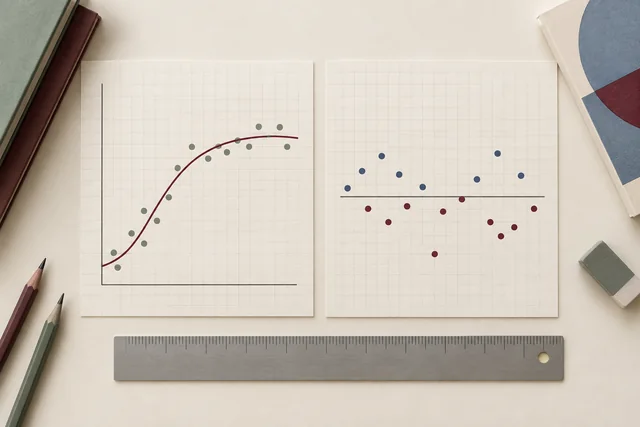
Use residuals to decide whether your model is useful
Read the pattern behind a fit, compare alternatives and connect prediction error to the investigation.
Read the guide ↗
Eight starting questions for a Biology investigation
Original investigation seeds with measurable outcomes, manageable boundaries and practical checks before collecting data.
Read the guide ↗
Check database quality before starting a Biology IA
Audit provenance, sampling effort and definitions so your database analysis supports a defensible biological question.
Read the guide ↗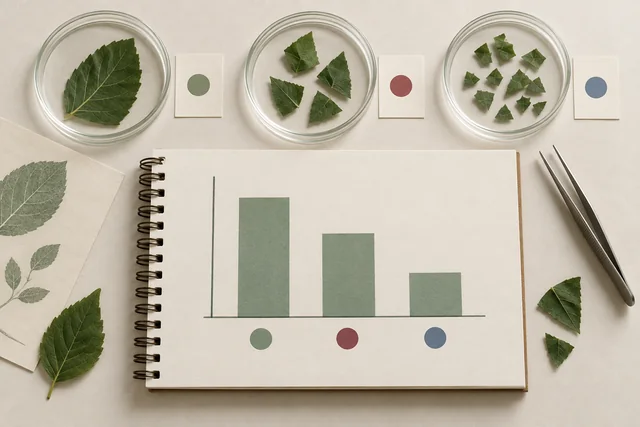
Read Biology data questions before reaching for memorized answers
Use axes, controls and specific evidence to build clear answers to unfamiliar biological data.
Read the guide ↗
Eight starting questions for a Chemistry investigation
Original question seeds for measurable chemical relationships, with pilots and controls to establish feasibility.
Read the guide ↗
Make measurement uncertainty useful in a Chemistry IA
Track uncertainty from the apparatus to the result and identify which measurement improvement would matter most.
Read the guide ↗
Eight starting questions for a Physics investigation
Original seeds for measurements, models and published data, with a clear practical risk to test in a pilot.
Read the guide ↗
Make a Physics IA graph support a physical conclusion
Choose meaningful axes, interpret gradient and intercept, and evaluate the fit using the actual measurements.
Read the guide ↗
Turn science IA limitations into useful improvement actions
Explain the effect of a limitation and propose a practical change that would strengthen the investigation.
Read the guide ↗
Use science command terms to shape your answer
Identify the kind of response requested and connect it to the question's evidence, marks and scientific context.
Read the guide ↗Plan an ESS investigation around a local environmental issue
Connect a measurable local question with a relevant strategy, perspectives and a feasible collection method.
Read the guide ↗
Build ESS case studies you can use in an argument
Turn case-study notes into evidence for systems, perspectives and sustainability, then practise adapting them to a question.
Read the guide ↗
Plan a Computer Science project around a solvable problem
Define the problem, success conditions and computational approach before adding features or writing the full solution.
Read the guide ↗
Choose Mathematics AA or AI using evidence about your goals
Compare course emphasis, entry requirements and your learning experience before deciding on a course and level.
Read the guide ↗Choose your science subjects and levels with a realistic plan
Use entry requirements, subject experience and the full Diploma workload to choose sciences at HL or SL.
Read the guide ↗
Turn your IB notes into something you can practise
Build short, usable notes that connect a concept to a question, a worked example and a next action.
Read the guide ↗
Build a weekly recall-and-practice routine
Combine short closed-notes attempts, targeted checking and exam-style practice without rebuilding your whole timetable.
Read the guide ↗
Run an IB study group that produces useful work
Use a short agenda, independent attempts and focused explanations so a group session ends with clear next steps.
Read the guide ↗
Read the command term before writing the answer
Use question wording, evidence and the available marks to plan a response that does the task being asked.
Read the guide ↗
Plan an IB exam essay before the first paragraph
Build a compact argument plan that stays attached to the exact question and the evidence you can use.
Read the guide ↗
Turn a mock exam into a practical improvement plan
Separate knowledge, method, communication and timing problems so the next revision task addresses the real gap.
Read the guide ↗
Make a holiday study plan that leaves room for a holiday
Choose a few useful outcomes, protect flexible time and avoid returning to school with an impossible backlog.
Read the guide ↗Start the IB task you keep postponing
Make the first action small, identify the real obstacle and create a restart point for the next session.
Read the guide ↗Prepare the practical side of IB exam week
Confirm the timetable, permitted equipment and travel plan so avoidable uncertainty does not dominate the week.
Read the guide ↗
Make an IB parent–student check-in useful
Keep a short conversation focused on deadlines, obstacles and the support the student actually wants.
Read the guide ↗
Follow an extended essay from question to submission
Build a sequence of research decisions, useful drafts and final checks for an independent essay.
Read the guide ↗
Turn subject interests into extended essay possibilities
Use disciplinary lenses to create original starting points without treating a topic bank as a ready-made question.
Read the guide ↗
Write an extended essay proposal that supports a decision
Explain the question, evidence, method and first research steps in a concise working proposal.
Read the guide ↗
Refine an extended essay question as the evidence develops
Use scope, terms and competing answers to keep a research question aligned with the investigation.
Read the guide ↗Build an extended essay outline around a line of argument
Organize claims, evidence and judgments before deciding how the paragraphs should read.
Read the guide ↗Make extended essay research produce usable evidence
Build a source trail, compare competing accounts and turn reading into analysis.
Read the guide ↗Start an extended essay draft when motivation is low
Reduce a stalled essay to one evidence-based paragraph and a clear next action.
Read the guide ↗Redraft an extended essay without losing the argument
Audit the question, evidence and section order before editing individual sentences.
Read the guide ↗Write EE reflections for the correct assessment session
Keep a decision record and distinguish the legacy RPPF from the revised RPF.
Read the guide ↗Prepare for the EE viva voce with your research record
Use the final reflection conversation to explain your decisions, findings and learning.
Read the guide ↗Choose between subject-focused and interdisciplinary EE pathways
Compare the revised pathways while keeping World Studies advice in its correct cohort.
Read the guide ↗
Start a balanced CAS programme with clear goals
Build sustained experiences across creativity, activity and service with a practical evidence plan.
Read the guide ↗
Choose CAS experiences that have a purpose
Adapt creativity, activity and service ideas around your interests, starting point and community needs.
Read the guide ↗
Design a CAS project idea around collaboration
Turn an appealing idea into a purposeful project with shared roles, learning and realistic scope.
Read the guide ↗
Carry a CAS project from planning to completion
Use dependencies, shared reviews and practical evidence to deliver a collaborative project.
Read the guide ↗Write CAS reflections from significant moments
Connect what happened, your response and what you learned using evidence from the experience.
Read the guide ↗Support a student's CAS without taking over
Help with access, routines and reflection while keeping the student's decisions and responsibilities visible.
Read the guide ↗Use CAS interviews to review learning and next steps
Bring specific evidence and decisions to coordinator conversations throughout the programme.
Read the guide ↗
Test access before choosing a political engagement project
A promising political engagement project starts with a decision that affects people differently.
Read the guide ↗
Study Economics through model-to-event practice
Economics revision becomes useful when you can explain how an event changes incentives, choices or outcomes.
Read the guide ↗Build a Philosophy exam argument with a serious objection
A Philosophy answer needs a claim that someone could reasonably challenge.
Read the guide ↗Make every Economics commentary paragraph do a clear job
An Economics commentary becomes easier to draft when each paragraph advances one connected explanation of the chosen article.
Read the guide ↗Turn political news into a comparative case-study file
A useful Global Politics case-study file records evidence you can use to explore a political question.
Read the guide ↗
Read ethnography through context, concepts and reflexivity
An ethnography offers more than interesting details about a community.
Read the guide ↗Build Geography case studies around scale and process
A Geography case study should help explain why a pattern occurs, how a process operates or how a response affects different people and places.
Read the guide ↗Write an Economics IA judgment that follows from conditions
Evaluation in an Economics commentary should change or refine a conclusion reached through analysis.
Read the guide ↗Choose a Business IA question by testing the decision
A Business Management IA question becomes manageable when it concerns a specific organization's decision or issue.
Read the guide ↗Use business tools to explain an organization’s choices
A Business Management tool is useful when it helps you answer a particular organizational question.
Read the guide ↗Check an Economics IA portfolio as one connected submission
An Economics IA portfolio needs coordination as well as strong individual commentaries.
Read the guide ↗Sort Economics IA ideas by whether the article supports analysis
An Economics IA idea should lead to a suitable article and an explainable event.
Read the guide ↗Choose a Geography fieldwork question from measurable patterns
A Geography fieldwork question should connect a geographical process to observations you can collect appropriately.
Read the guide ↗Organize Philosophy notes as a network of arguments
Philosophy notes become easier to use when they are organized around problems rather than isolated thinkers.
Read the guide ↗Write political analysis beyond a point-and-example formula
A Global Politics paragraph needs a claim about a political relationship, not simply a sentence announcing a case.
Read the guide ↗Analyse Geography fieldwork by explaining patterns and exceptions
Geography fieldwork analysis should show what your primary data reveal about the fieldwork question.
Read the guide ↗Map the Economics course through connected questions
An Economics course map should reflect the content and assessment guidance your school provides for your examination session.
Read the guide ↗Write a business case recommendation with evidence and trade-offs
Current Business Management preparation should focus on the task and stimulus supplied for your course.
Read the guide ↗Move from economic explanation to a supported essay judgment
Economics Paper 1 preparation benefits from distinguishing a request for explanation from a request for evaluation.
Read the guide ↗Run a diagnostic week before Economics exams
An Economics revision week should begin with evidence about what you can currently do.
Read the guide ↗
Choose a History investigation topic by testing its sources
A History investigation topic should give you a question to examine through evidence.
Read the guide ↗
Narrow a History question without deciding its answer
A research question should tell a reader what historical problem you intend to answer.
Read the guide ↗
Turn History lessons into evidence-based arguments
After a History lesson, identify the question it helped answer.
Read the guide ↗Keep a History investigation moving through research checkpoints
A History investigation needs progress you can inspect before the full draft exists.
Read the guide ↗Revise History using a comparative argument grid
History revision is easier to direct when you choose an analytical question from your taught content.
Read the guide ↗Build a History course map for your examination cohort
History has a revised course first assessed in May 2028.
Read the guide ↗Draft a History investigation around claims and counterevidence
Before drafting a History investigation, write a provisional answer to the research question and identify its limits.
Read the guide ↗Evaluate a historical source for a specific question
A historical source is useful for some questions and limited for others.
Read the guide ↗
Study Psychology by linking explanations, methods and concepts
Psychology study becomes more useful when an explanation is connected to the research that supports it.
Read the guide ↗
Choose a Psychology proposal idea through population and method fit
For Psychology first assessed in May 2027, the IA is a research proposal.
Read the guide ↗
Navigate Psychology 2027 through content, concepts and practicals
The revised Psychology course is first assessed in May 2027.
Read the guide ↗Audit a Psychology research proposal from question to instrument
A Psychology IA for the course first assessed in 2027 proposes research rather than presenting invented or collected findings as an experimental report.
Read the guide ↗
Build a creative workflow across the DP arts
The DP arts include distinct subjects with their own practices and assessment tasks.
Read the guide ↗
Curate evidence for the Visual Arts art-making inquiries portfolio
For Visual Arts first assessed in May 2027, the art-making inquiries portfolio is a current assessment task.
Read the guide ↗
Connect musical exploration, experimentation and presentation
Musical Links Investigation belongs to an earlier Music syllabus.
Read the guide ↗Understand what your internal assessments require
Compare task formats and cohort rules before building a coursework plan.
Read the guide ↗Plan an IA through evidence, dependencies and checks
Write a practical project brief and test the most uncertain step before committing.
Read the guide ↗
Navigate the current TOK course and its assessments
Connect knowledge questions, themes and areas of knowledge to everyday classroom practice.
Read the guide ↗Turn a real situation into a TOK knowledge question
Move from facts about one case to a precise question about justification, methods or interpretation.
Read the guide ↗Use the TOK knowledge framework to deepen an example
Examine scope, perspectives, methods and tools, and ethics without turning them into a paragraph formula.
Read the guide ↗Discuss reason, language and emotion within current TOK
Examine how familiar ways of thinking affect justification without using the retired WOK checklist.
Read the guide ↗Compare areas of knowledge through a shared issue
Examine differences in evidence, methods and aims using specific cases rather than stereotypes.
Read the guide ↗
Explore interpretation and ethical responsibility in the arts
Distinguish support for an interpretation from judgments about creating, sharing and using art.
Read the guide ↗Examine how communities shape you as a knower
Connect personal experience, shared practices and justified trust within current TOK.
Read the guide ↗Draft a TOK exhibition commentary with distinct contributions
Explain each object's context, link to the prompt and individual role in the exhibition.
Read the guide ↗Plan a TOK essay around the prescribed title
Unpack the title, select useful cases and build a line of reasoning before drafting.
Read the guide ↗Revise a TOK essay for focus, examples and implications
Find where the argument drifts, strengthen knowledge analysis and make the final judgment follow.
Read the guide ↗Use TOK to examine AI-generated claims
Separate fluent output from evidence and investigate how tools shape knowledge and trust.
Read the guide ↗
Keep assessed work traceable to your own decisions
Build research and draft habits that preserve authorship, acknowledge assistance and prevent source confusion.
Read the guide ↗Build citations while you research
Connect claims, quotations, images and data to sources using one consistent referencing approach.
Read the guide ↗Read the TOK and EE core-points matrix correctly
Look up grade pairs accurately and keep points separate from completion requirements.
Read the guide ↗Recover from common core and coursework problems
Use evidence and school support to repair a stalled project, incorrect brief or missing submission detail.
Read the guide ↗
Map the different tasks in Literature and Language and Literature
Literature and Language and Literature develop closely related interpretive skills, but they organize material and assessment differently.
Read the guide ↗
Turn Language B reading and listening into usable language
Reading and listening help Language B learning when you use them to communicate something yourself.
Read the guide ↗
Build a Language B error notebook that changes your next attempt
A useful Language B error notebook focuses on repeated choices that affect communication.
Read the guide ↗
Plan an English IO through a focused issue and evidence map
An English Individual Oral begins with a focused global issue and appropriate studied material for your Language A course.
Read the guide ↗Read a non-literary text through audience, layout and language
Language and Literature Paper 1 practice involves unseen non-literary material.
Read the guide ↗Analyse an unseen literary passage through its movement
Literature Paper 1 practice begins with understanding how an unseen passage develops.
Read the guide ↗Prepare for a language oral by identifying the exact task
Language A and Language B orals have different purposes and material requirements.
Read the guide ↗Build oral confidence through predictable rehearsal steps
Oral confidence can grow when rehearsal gives you clear actions and useful feedback.
Read the guide ↗Choose Spanish B text conventions by audience and purpose
Spanish B writing practice should begin with the situation, audience and purpose in the task.
Read the guide ↗Connect Literature oral extracts to the whole work
The Literature Individual Oral uses two studied literary works, with the required language-origin and translation relationship.
Read the guide ↗Plan Language B learning with the correct cohort guide
The next revised Language B course is first assessed in May 2029.
Read the guide ↗Build a Paper 2 comparison through authorial choices
Language A Paper 2 asks for a comparative response based on studied literary works.
Read the guide ↗Practise French B oral responses that stay relevant and flexible
French B oral preparation should follow the task for your level and examination cohort.
Read the guide ↗
Choose a calculus method before calculating
Connect a question to a derivative, integral or other mathematical approach, then check what the result means.
Read the guide ↗Choose maths resources by the problem you need to solve
Use a short resource shortlist and a repeatable practice cycle instead of collecting more notes.
Read the guide ↗
Build a Biology explanation that follows the question
Link a biological mechanism, evidence and the required outcome instead of listing disconnected facts.
Read the guide ↗
Find a quantitative route through a Chemistry question
Connect a balanced relationship, amounts and units before using a formula.
Read the guide ↗
Use the Physics data booklet with a clear model
Find an applicable relationship, understand its symbols and check the physical meaning of the answer.
Read the guide ↗
Develop a design brief that can be tested
Connect a genuine user need to measurable criteria, prototype evidence and a justified design decision.
Read the guide ↗
Check your Computer Science syllabus before choosing materials
Separate current course content, programming practice and project requirements when older resources disagree.
Read the guide ↗
Build a university plan around the course you want to study
Compare curriculum, learning methods and requirements before turning interest into an application list.
Read the guide ↗
Build a shortlist with credible alternatives
Compare course fit, requirements and practical feasibility before choosing a backup option.
Read the guide ↗
Research scholarships through eligibility and evidence
Find relevant awards, check their rules and plan nomination or application dependencies.
Read the guide ↗
Use the post-IB summer to decide and prepare
Balance recovery, admission tasks and small experiments that clarify your next step.
Read the guide ↗Plan a gap year with a route back to study
Define goals, confirm entry arrangements and keep a realistic review schedule.
Read the guide ↗Plan a motivation letter from evidence of course fit
Connect academic interests, actual experience and programme features before drafting.
Read the guide ↗Revise a motivation letter for specificity and coherence
Remove generic claims, clarify the connection to the course and preserve your own voice.
Read the guide ↗
Plan a Dutch university application by programme
Check diploma and subject fit, distinguish selection routes and follow each portal's requirements.
Read the guide ↗
Help with university applications while preserving student ownership
Agree practical roles, use verified information and support decisions without writing the application.
Read the guide ↗
Report IB grades without inventing a GPA conversion
Use the school's grading information and each institution's instructions to describe your academic record accurately.
Read the guide ↗Interpret an IB entry requirement or conditional offer
Separate total points, subject grades and selection conditions before judging whether an option fits.
Read the guide ↗Choose IB levels with university prerequisites in view
Use a course shortlist to distinguish required subjects from helpful preparation and personal preference.
Read the guide ↗Use UCAS Tariff information without misreading IB requirements
Check the qualification entry and course policy before calculating or comparing points.
Read the guide ↗Build an application checklist with owners and completion checks
Track school documents, recommendations, forms and final results across institutions.
Read the guide ↗Plan Canadian applications around institution and programme rules
Check academic requirements, supplemental tasks and final IB results without assuming one national process.
Read the guide ↗Build movement and breaks into a realistic study day
A study day includes lessons, travel, meals, activities and time away from academic work.
Read the guide ↗Turn study advice into a small experiment you can evaluate
Study advice becomes useful when it addresses a problem you can describe.
Read the guide ↗Use a short reset when an exam question feels overwhelming
When a question feels overwhelming, a simple sequence can help you find the next academic action.
Read the guide ↗Set up a study space around the task you need to finish
A useful study space gives you access to what the task needs and reduces avoidable interruptions.
Read the guide ↗Build a revision schedule with capacity for disruption
Revision planning starts with lessons, commitments and examination dates supplied by your school.
Read the guide ↗Move from one exam to the next without an endless post-mortem
After an examination, identify whether your next task is preparation for another paper or returning to ordinary life after the final one.
Read the guide ↗Check exam-day clothing and comfort before the morning
Exam-day clothing is a practical decision about school requirements, comfort and the conditions of the room.
Read the guide ↗Practise a simple routine for the start of an examination
A short starting routine can help you check instructions and find the first task.
Read the guide ↗Turn an ambitious IB score goal into an evidence-based plan
An ambitious score goal can provide direction, but it does not tell you what to practise today.
Read the guide ↗Prepare for a mock exam as a realistic diagnostic
Schools use mock examinations in different ways, so ask what content, format and conditions apply to yours.
Read the guide ↗Make revision varied while keeping the learning target visible
Revision can include games, challenges and creative formats, but the activity should still test a defined skill.
Read the guide ↗Repair an overloaded IB week through scope and support
When a week feels unmanageable, write down the actual tasks, deadlines and commitments.
Read the guide ↗Compare IB and A-level entry routes for the same course
Use published subject and grade conditions to understand qualification differences without a universal ranking.
Read the guide ↗Plan IB subjects for a possible law pathway
Distinguish undergraduate and later-entry routes, check course rules and develop useful academic habits.
Read the guide ↗Compare Oxbridge and US options through actual courses
Examine degree structure, selection tasks and practical fit institution by institution.
Read the guide ↗Check US recognition, credit and placement separately
Understand what an IB policy means for admission and what it may change after enrolment.
Read the guide ↗Find a focused story for your Common App essay
Use a real moment to show decisions and growth without retelling the entire IB programme.
Read the guide ↗Build a current UCAS application from verified information
Coordinate qualifications, school support and the three-question personal statement used from 2026 entry.
Read the guide ↗Prepare for an academic interview through visible reasoning
Practise listening, explaining an approach and adapting when a new question challenges your first answer.
Read the guide ↗Make study motivation easier to act on through visible next steps
Motivation is easier to discuss when you identify the work in front of you.
Read the guide ↗Build a workable learning routine for a subject you dislike
You do not need to enjoy a subject equally every day to make progress.
Read the guide ↗Use podcasts and study videos as prompts for your own work
A podcast, explanation video or study vlog is useful when it supports a defined learning or planning task.
Read the guide ↗Use short gaps for tasks that genuinely fit the time
A short gap between commitments does not need to become study time automatically.
Read the guide ↗Choose task order using difficulty, dependencies and available time
Starting with the hardest task can be useful, but it is not a rule for every study session.
Read the guide ↗Use a syllabus and rubric to identify evidence your work needs
Start with the course outline, task instructions and assessment criteria supplied by your school for your cohort.
Read the guide ↗Write an argument paragraph with a clear evidence link
An argumentative paragraph should advance part of the answer, rather than simply introduce a topic you know about.
Read the guide ↗Choose academic support by defining the problem and testing the fit
Before choosing tutoring, a course or another resource, identify the task you cannot yet perform.
Read the guide ↗Choose a study app by testing one complete workflow
A study app should solve a task you can describe, such as reviewing corrections, managing deadlines or storing source notes.
Read the guide ↗Understand DP difficulty by examining tasks and constraints
The Diploma Programme combines subjects and core commitments, but how demanding it feels depends on prior knowledge, task choices, support and other responsibilities.
Read the guide ↗Choose useful last-minute exam tasks without rebuilding the course
Last-minute preparation needs a smaller scope than a long revision plan.
Read the guide ↗Balance extracurricular commitments through a realistic map
Extracurricular activities can be meaningful parts of your week, but their time demands belong beside lessons, coursework and ordinary responsibilities.
Read the guide ↗Plan evening review and a morning check while protecting sleep
Sleep contributes to learning and memory, according to NIH guidance, but that does not make sleep a substitute for studying course content.
Read the guide ↗Write an IB study goal with an output and review point
A useful study goal states what you want to be able to do.
Read the guide ↗Check an online IB resource before building revision around it
An online resource is useful when it fits your subject, level, cohort and learning need.
Read the guide ↗Plan a class presentation around audience understanding
Class presentations and assessed oral tasks can have different requirements.
Read the guide ↗Prepare a results-day action sheet for your own session
Results access and timing depend on your session and school arrangements.
Read the guide ↗Discuss an enquiry upon results with a concrete decision brief
An enquiry upon results is a formal process with different services, rather than a general appeal based on how a student expected to perform.
Read the guide ↗Check retake feasibility with the school and current curriculum
If you are considering a retake, begin with the official result and the requirement you want to meet.
Read the guide ↗Read school reports and predicted grades through their evidence
A school report, a predicted grade and an official final result can represent different judgments.
Read the guide ↗Build a One-Page Map of the IB Diploma
Understand the DP through a practical course, core and assessment map you can discuss with your school.
Read the guide ↗Choose HL and SL with Evidence
Compare the actual course demands, prerequisites and your learning evidence before choosing a subject's level.
Read the guide ↗Build a Balanced DP Subject Combination
Create and test a subject combination that fits school rules, your interests and plausible next steps.
Read the guide ↗Decide Whether the DP Fits Your Learning
Evaluate the diploma through the work you will do, the support available and your realistic alternatives.
Read the guide ↗Check Your Route to a Bilingual Diploma
Verify the language combination, teaching languages and practical support behind a possible bilingual diploma.
Read the guide ↗Build a Realistic DP Cost Plan
Ask the right school questions and create a practical budget without relying on a universal list of IB fees.
Read the guide ↗Fact-Check a Claim About the IB
Use a simple evidence process to investigate DP myths, alarming advice and confident statements from other cohorts.
Read the guide ↗Plan a DP Combination for a STEM Direction
Translate a broad STEM interest into verified course requirements, realistic subject choices and useful exploration.
Read the guide ↗Choose DP Subjects for a Medical Study Route
Research the stage of entry and course-specific requirements before building a medical study plan.
Read the guide ↗Compare DP and AP Through a Real Study Plan
Compare the programmes available at your school by subjects, assessment, support and future course requirements.
Read the guide ↗Use IB Terminology to Support a DP Student
Translate common DP terms into useful questions for a calm, practical conversation at home.
Read the guide ↗Turn the Learner Profile into Everyday Actions
Choose observable behaviours that make the ten IB learner profile attributes useful in your study and collaboration.
Read the guide ↗Prepare for the Transition into DP1
Build a small preparation plan around academic skills, subject foundations and questions for your new school.
Read the guide ↗Build a Useful Reading Plan Before DP1
Choose a small, accessible reading mix and practise the habits you will need for subject learning and discussion.
Read the guide ↗No guides match these filters.
Try fewer words or another subject.