Connect musical exploration, experimentation and presentation
Musical Links Investigation belongs to an earlier Music syllabus.
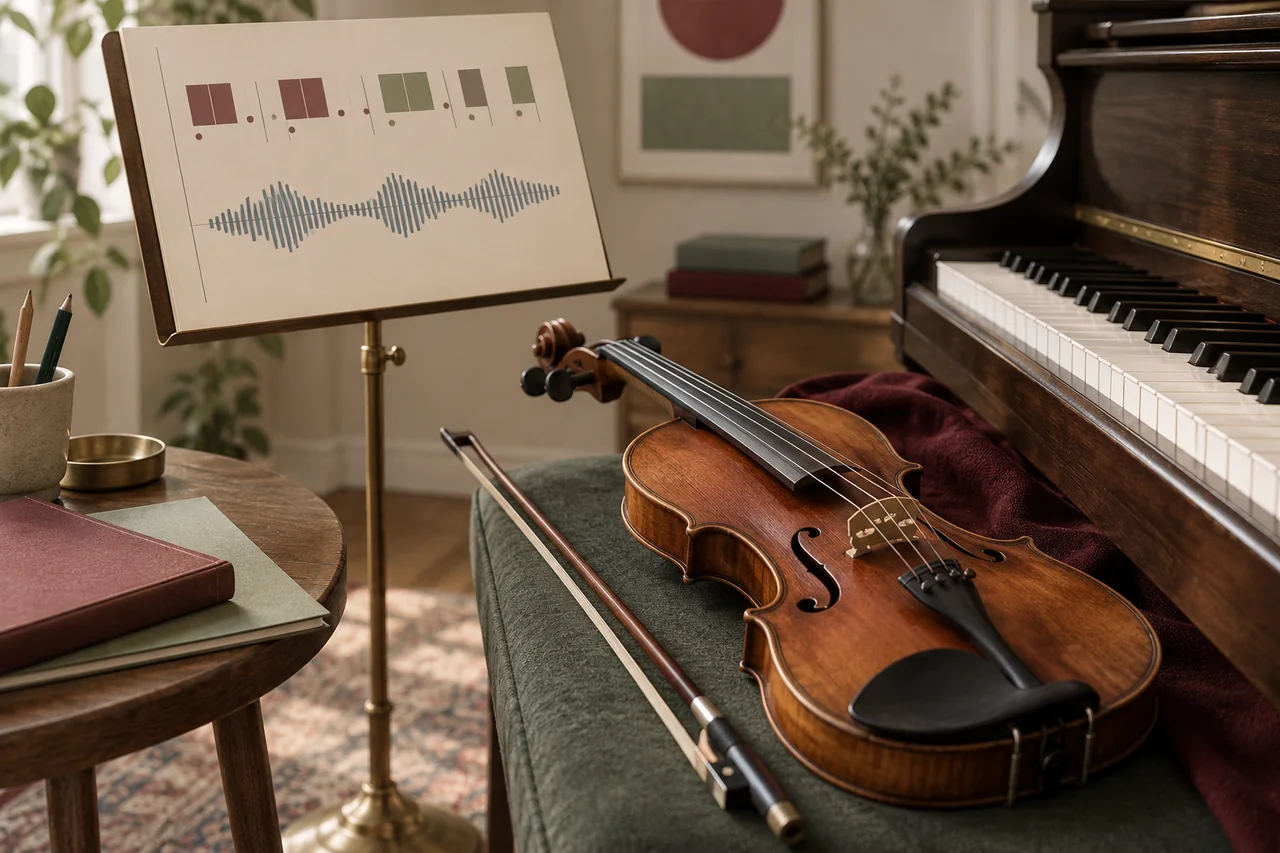
Begin with the current Music tasks
Musical Links Investigation belongs to an earlier Music syllabus. The course first assessed in 2022 uses exploring, experimenting and presenting music, with an additional HL project. Start with the current task guidance for your level. A productive workflow connects contextual understanding to music-making while keeping each task's purpose clear. Comparing musical material can still be a learning activity, but it should not be framed as completion of the legacy MLI.
Explore context through listening and research
Choose material appropriate to your course and investigate its musical features and context. Listen closely, keeping time references and notes about the features you can support. Use reliable sources to understand practices and meanings unfamiliar to you. Avoid assuming that one piece represents an entire musical culture. Explain how contextual understanding informs the musical questions you intend to investigate through creating or performing.
Make an experiment answer a question
Choose a feature to test, such as rhythmic organization, texture, timbre or phrasing. State what you intend to discover and preserve versions or recordings as you work. An experiment should help you observe the effect of a decision. Simply performing the same passage repeatedly without a changing question or documented response gives you less to interpret. Keep the choices appropriate to the material and credit source music accurately.
Try a texture experiment
Imagine adapting a short melody first with sparse accompaniment and then with a denser layered texture. Compare what happens to clarity, tension and the listener's attention. Record a reason for retaining or revising a choice, then make another version to test it. The example is a method of musical inquiry, not a prescribed submission format. Link the decision to your intention and the context you researched, rather than declaring one texture universally better.
Prepare presentation with purpose
When selecting work for presentation, explain why the material and choices fit your musical intentions. Use current guidance to prepare the required supporting material and formats. Check recordings for audibility, complete passages and correct versions. Reflection should make your musical decisions understandable without claiming outcomes unsupported by the sound. A connected workflow leaves you with contextual insight, documented experiments and a presentation whose choices you can explain clearly.
Make the next creative decision visible
End the session by recording one decision, the evidence behind it and the next test you intend to make. Keep dated photographs, recordings or notes in a consistent folder so later selection can show development accurately. Credit outside material when you use it and preserve the context of influences. An unsuccessful trial can be useful evidence if you explain what it taught you and how the next version changed. Select documentation for what it reveals about your creative thinking, rather than for the volume of material you accumulated. Before final export, inspect the work in its intended format. Small text, cropped images or distorted sound can hide evidence that looked clear in the working file. Correct presentation problems while preserving the documented creative decisions.
Your next-step checklist
Checklist choices stay in this browser.
Official references
This is an original practical guide from IBvia. The examples are illustrative; your subject guide, assessment year and school instructions determine the requirements.
Keep working on your next step
Build a creative workflow across the DP arts
The DP arts include distinct subjects with their own practices and assessment tasks.
Read the guide ↗
Curate evidence for the Visual Arts art-making inquiries portfolio
For Visual Arts first assessed in May 2027, the art-making inquiries portfolio is a current assessment task.
Read the guide ↗