Build movement and breaks into a realistic study day
A study day includes lessons, travel, meals, activities and time away from academic work.

Plan the whole day, not only study blocks
A study day includes lessons, travel, meals, activities and time away from academic work. Put those commitments on the plan before adding independent study. If you enjoy movement, include an accessible activity that fits your circumstances, rather than treating it as a reward you must earn by finishing every task. This guide is a planning routine; it does not promise that a particular activity will raise your grade.
Give each study block an output
Choose a specific result such as a short explanation, corrected problem set or project decision. Estimate a manageable work period and leave space between commitments. A break should not depend on completing a task whose scope is unclear. If a block overruns repeatedly, divide the task or revise the estimate. Keep the next action visible so returning after a break does not require rebuilding the whole plan.
Try a practical afternoon
Imagine arriving home with a mathematics question set and an essay paragraph to revise. You could complete a small question group, take a walk if appropriate, then review the reasoning before starting the paragraph. Leave time for a meal and other commitments. If rain or mobility needs make the walk unsuitable, choose another comfortable break. The plan's purpose is a workable rhythm, not adherence to one prescribed activity.
Distinguish a break from avoidance
Before stopping, write the next action and decide when you intend to return. During the break, choose something that actually fits the time available. If a short pause regularly turns into an unplanned hour online, revise the transition rather than blaming the break itself. If you are too tired to work usefully, reassess the evening's priorities and ask for help where the workload is persistently unmanageable.
Adjust to the week you have
Busy activity days may need smaller study outputs, while a quieter day can support longer work. Protect flexibility instead of copying a schedule designed for someone else's commitments. Discuss persistent clashes with teachers or family before deadlines approach. The aim is to keep academic tasks and ordinary life on the same realistic plan, with progress that can be inspected and time away from work that is allowed to remain part of the day.
Draw a complete-day worksheet
Draw three columns: fixed commitments, academic outputs and transitions. Place meals, activity and travel in the first column before selecting study outputs. In the transition column, note where a break fits and what action follows it. Check whether any activity or study block overlaps another commitment. Revise that conflict before trying the day. At the end, compare the plan with what happened and adjust one estimate; do not infer that movement caused a change in academic performance from a single day.
Your next-step checklist
Checklist choices stay in this browser.
Official references
This is an original practical guide from IBvia. The examples are illustrative; your subject guide, assessment year and school instructions determine the requirements.
Keep working on your next step
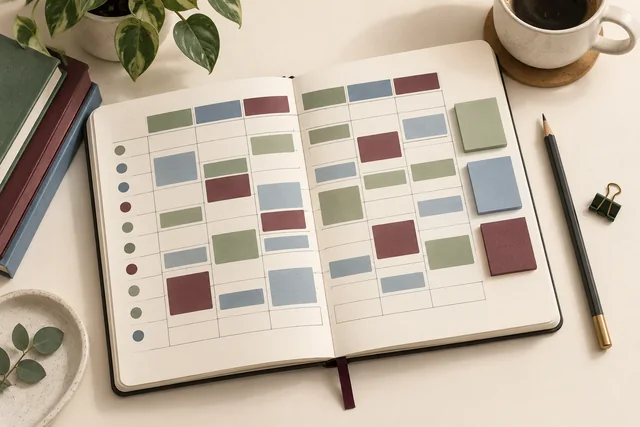
Build a DP1 study system you can keep using
A practical weekly routine for lessons, independent practice and the first steps of longer IB projects.
Read the guide ↗
Turn DP2 deadlines into a workable plan
Work backwards from your school's dates, spot dependencies and protect time for revisions and exams.
Read the guide ↗