Curate evidence for the Visual Arts art-making inquiries portfolio
For Visual Arts first assessed in May 2027, the art-making inquiries portfolio is a current assessment task.
Use the task for your cohort
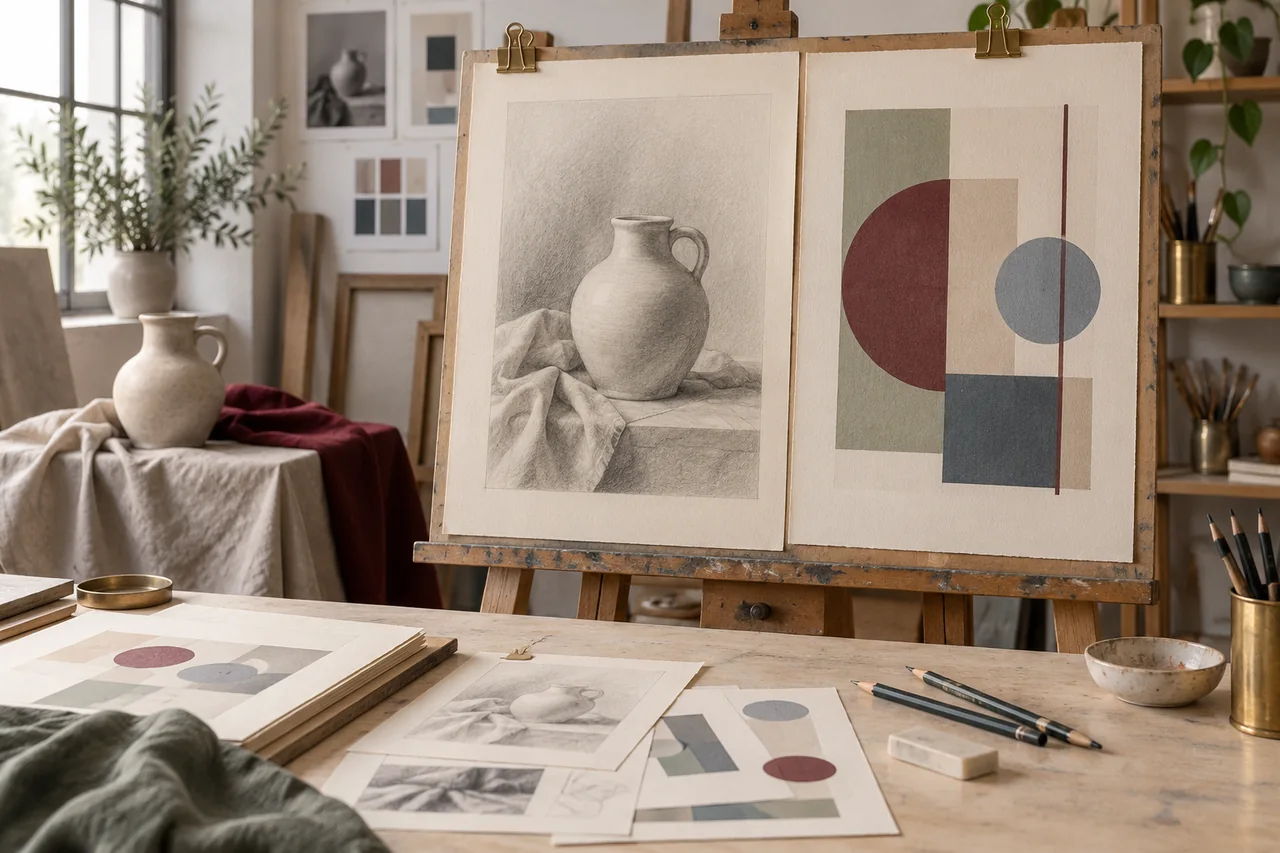
For Visual Arts first assessed in May 2027, the art-making inquiries portfolio is a current assessment task. Older process-portfolio advice should not determine the structure of your submission. Begin with the current requirements for your level and the lines of inquiry guiding your art-making. Your portfolio should make the development of visual language understandable through selected visual evidence and reflection, rather than simply document every activity completed during the course.
Collect evidence around decisions
Photograph or scan experiments as they develop, keeping dates, materials and context in your working archive. Beside a trial, record the intention, what happened and what you changed next. Evidence of refinement is easier to understand when successive versions show a visible decision. Keep research into artists and contexts connected to what you actually make. A reference image contributes meaning when you explain the relevant influence and acknowledge its source.
Try a layered-surface inquiry
Imagine exploring how layered translucent surfaces can communicate uncertain memory. Early tests compare materials, opacity and arrangement. One version obscures the underlying image too completely; another leaves enough detail to create tension. Document both and explain why you choose the second approach. Then test scale or viewing angle. This sequence shows a line of inquiry moving through decisions, rather than a page of samples followed by a finished work with no visible relationship.
Select for the reader's understanding
Curate evidence that reveals important changes, discoveries and choices. More images are not automatically more informative. A detail photograph may explain a material effect better than several nearly identical full views. Use clear captions and readable layout, with writing that interprets the visual evidence rather than repeating what the viewer can see. Check the current screen, word and file requirements with your teacher instead of relying on limits quoted for the preceding course.
Review the inquiry as a whole
Read the portfolio in order and ask whether the reader can identify the intention, developments and emerging visual language. Remove unrelated documentation and add missing links where a decision appears unexplained. Preserve complexity where it matters: an inquiry need not look like a perfectly linear success story. A failed trial becomes relevant when it changes the next artistic choice. Final checking should ensure images remain legible and that reflections belong to your own documented process.
Make the next creative decision visible
End the session by recording one decision, the evidence behind it and the next test you intend to make. Keep dated photographs, recordings or notes in a consistent folder so later selection can show development accurately. Credit outside material when you use it and preserve the context of influences. An unsuccessful trial can be useful evidence if you explain what it taught you and how the next version changed. Select documentation for what it reveals about your creative thinking, rather than for the volume of material you accumulated. Before final export, inspect the work in its intended format. Small text, cropped images or distorted sound can hide evidence that looked clear in the working file. Correct presentation problems while preserving the documented creative decisions.
Your next-step checklist
Checklist choices stay in this browser.
Official references
This is an original practical guide from IBvia. The examples are illustrative; your subject guide, assessment year and school instructions determine the requirements.
Keep working on your next step
Build a creative workflow across the DP arts
The DP arts include distinct subjects with their own practices and assessment tasks.
Read the guide ↗
Connect musical exploration, experimentation and presentation
Musical Links Investigation belongs to an earlier Music syllabus.
Read the guide ↗