Explore interpretation and ethical responsibility in the arts
Distinguish support for an interpretation from judgments about creating, sharing and using art.
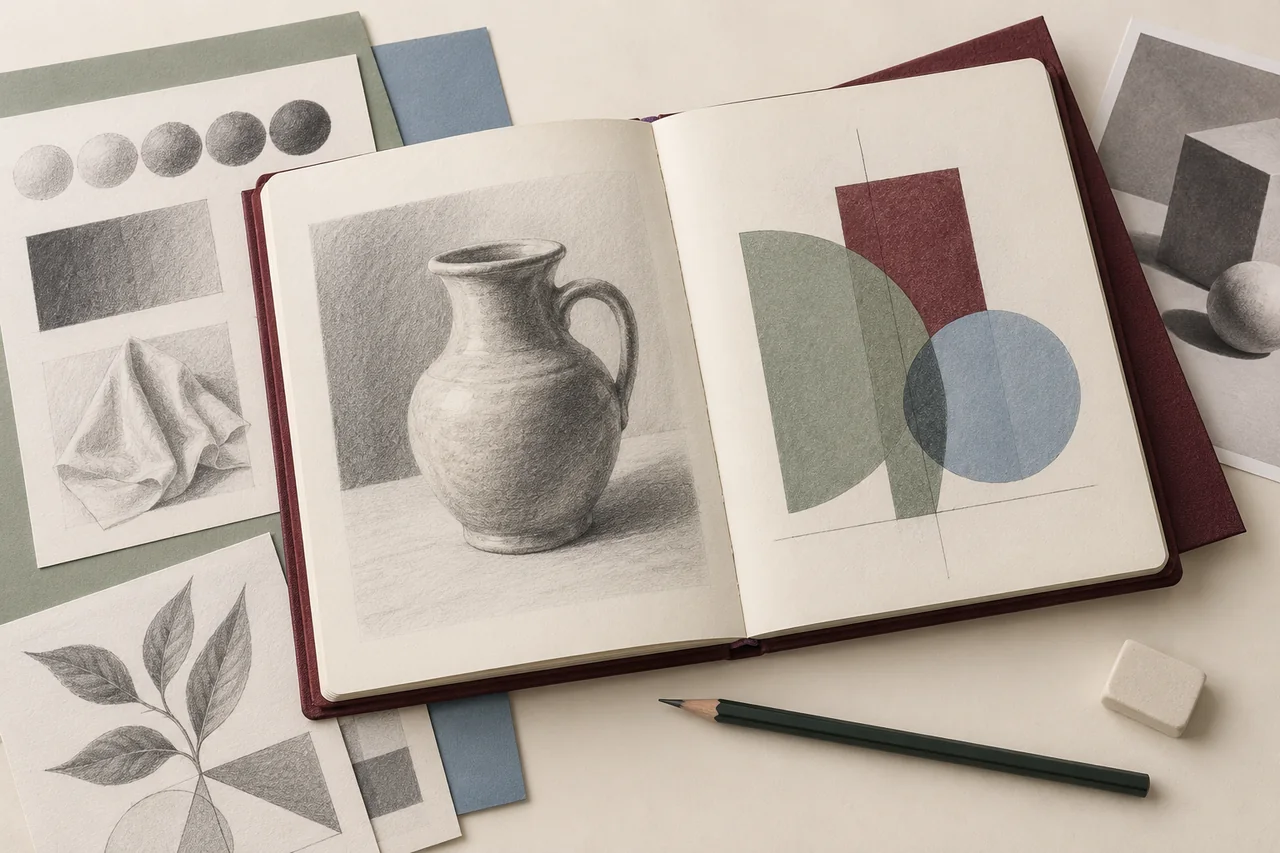
Separate the questions inside an artwork
An artwork can raise several kinds of question: what it means, how an interpretation is justified, what it communicates and whether a choice about its creation or display is responsible. Distinguish them before arguing. A disagreement about meaning is not automatically a disagreement about ethics. In current TOK, the arts is an area of knowledge and ethics is a framework element across the course. This arrangement helps you analyse ethical issues in artistic knowing without inventing a separate current ethics area of knowledge.
Identify evidence for an interpretation
Choose a particular work and explain which features support your interpretation: composition, recurring images, form, materials, narrative choices or context. Avoid claiming that any response is equally persuasive simply because interpretation is involved. Ask whether the account fits the work and whether it explains details another account overlooks. Personal response can be a starting point, but a reasoned interpretation should show its support. Sources about context may help, provided you distinguish their claims from your own analysis.
Consider whose knowledge and experience matter
An artist, a participant, a critic and a later audience may have different kinds of access to a work. Explain how that access affects their interpretation and what it does not settle. Knowing an artist's stated intention may illuminate a decision without exhausting every possible meaning. Likewise, a viewer's unfamiliarity with a context can create a limitation without making their experience meaningless. Discuss particular claims rather than ranking every perspective in advance. The question is which account is justified for the issue being investigated.
Work through an illustrative exhibition choice
Imagine a school planning to display photographs made during a community project. Some images are visually effective but include people who did not agree to public display. The TOK issue concerns responsibilities in turning experience into shared representations: who can authorize the use, what viewers may infer and whose perspective the selection communicates. A responsible choice might require consent, different images or a changed display. This does not establish that ethical art must be aesthetically weak; it shows how ethical choices can shape what knowledge is communicated.
Distinguish evaluation from censorship slogans
When discussing a disputed display, identify the concrete action and its possible consequences. Restricting access, changing explanatory labels and refusing to publish private material are different decisions. Ask which knowledge claims or responsibilities each affects. Consider a reasonable alternative and explain its costs. Avoid presenting the discussion as only absolute freedom versus absolute prohibition if the actual situation offers more nuanced choices. Ethical analysis is stronger when it examines the people, evidence and obligations involved rather than borrowing a ready-made political position.
Connect the case back to knowing
State what the example reveals about artistic interpretation, communication or responsibility. Does context improve understanding? Can a persuasive representation mislead? How should audiences evaluate what a selection leaves out? Use the original knowledge question or assigned title to decide which line matters. Recognize limits: one hypothetical exhibition cannot establish a universal rule for every artwork or society. For assessment examples, research and cite an actual case where required. The practice scenario here helps build questions and distinctions, not historical evidence.
Your next-step checklist
Checklist choices stay in this browser.
Official references
This is an original practical guide from IBvia. The examples are illustrative; your subject guide, assessment year and school instructions determine the requirements.
Keep working on your next step

Build a creative workflow across the DP arts
The DP arts include distinct subjects with their own practices and assessment tasks.
Read the guide ↗
Curate evidence for the Visual Arts art-making inquiries portfolio
For Visual Arts first assessed in May 2027, the art-making inquiries portfolio is a current assessment task.
Read the guide ↗